
When choosing an agricultural tractor, horsepower is often one of the first specifications buyers look at. Whether it is a 100 HP, 150 HP, or 200 HP tractor, many people assume that more horsepower automatically means greater pulling power.
However, real-world field performance tells a different story.
A high-horsepower tractor may struggle with excessive wheel slip during heavy tillage, while a smaller tractor with the right weight distribution, transmission, and traction system may perform more efficiently under the same conditions.
So, does more horsepower always mean greater tractor traction?
Not necessarily.
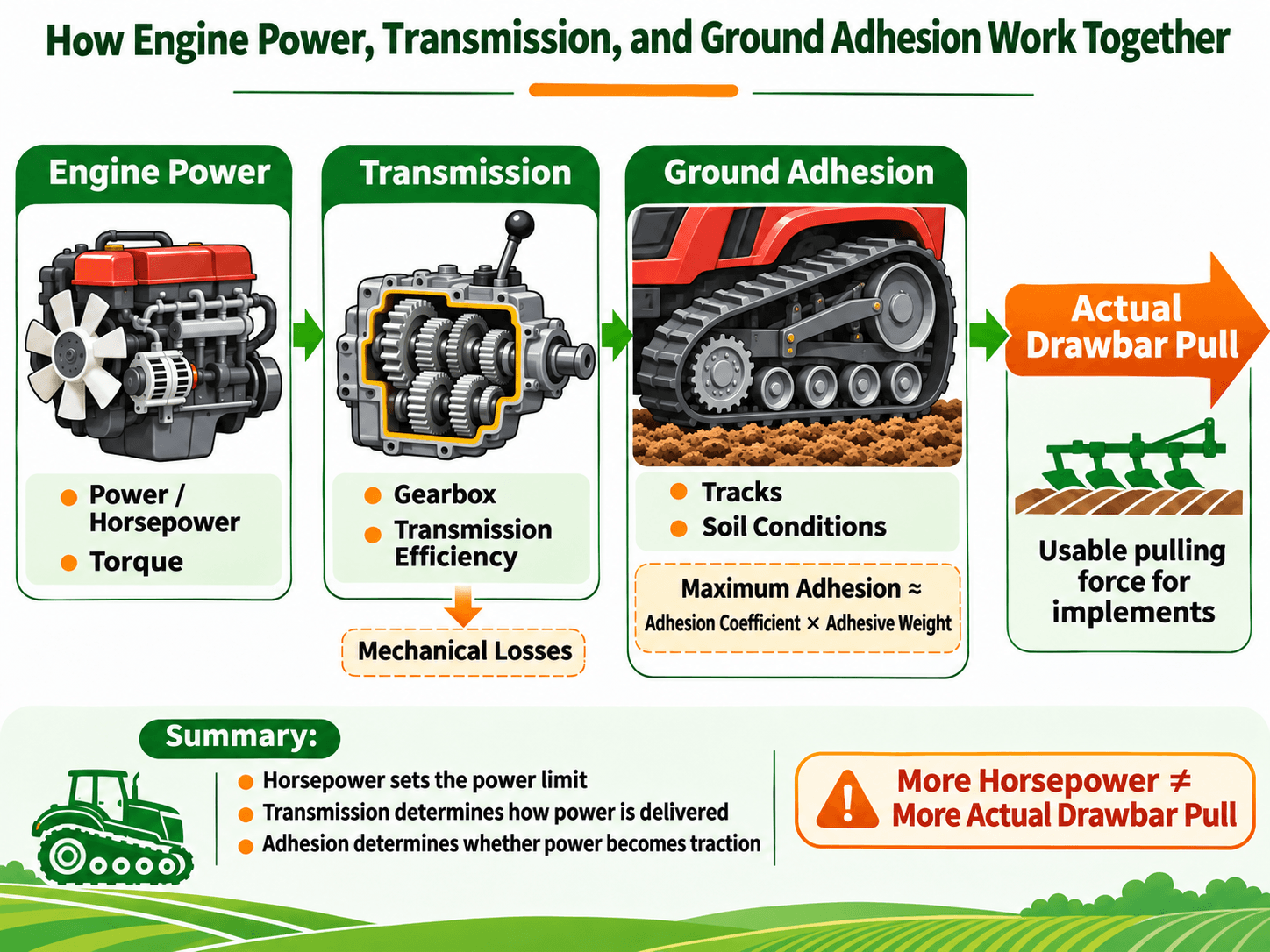
A tractor's actual pulling performance depends on several factors, including engine power, torque, transmission efficiency, operating weight, tire or track configuration, soil conditions, and implement resistance.
Understanding how these factors work together is essential for selecting the right tractor and improving agricultural productivity.
1. What Is Tractor Traction and Drawbar Pull?
Before discussing horsepower, it is important to understand two key terms: tractor traction and drawbar pull.
Tractor traction refers to the ability of a tractor's tires or tracks to generate driving force through contact with the ground.
Drawbar pull is the usable pulling force available to move an agricultural implement or other load.
Under simplified, steady operating conditions on level ground, drawbar pull can be expressed as:
Drawbar Pull (Fₜ) = Gross Tractive Force (Fq) − Motion Resistance (Ff)
Where:
- Fₜ: Net pulling force available at the drawbar.
- Fq: Gross tractive force developed through the drive wheels or tracks.
- Ff: Resistance to the tractor's own movement, including rolling resistance and soil deformation losses.
This relationship explains why engine horsepower alone cannot determine actual pulling performance.
If the tires or tracks cannot develop sufficient grip, some of the available power is lost through slip and soil disturbance rather than being converted into useful pulling force.
For farmers and agricultural machinery buyers, drawbar pull and tractive efficiency are important indicators of real-world tractor performance.